


Personnel

Vocals

Keyboards

Guitars, Vocals

Bass, Vocals

Percussion
Recommended Versions
Dan Hersch & Bill Inglot 2003 Stereo Remasters for Warner Music UK/USA
Available as:
HD 24-192 or 24-96 Downloads at HD Tracks, HiRes Audio
CD at Amazon
Vinyl LP as per original release at Amazon
MP3 Downloads at iTunes (Standard Edition, Mastered for iTunes), Google Play, 7 Digital, Microsoft Store
Streaming at Apple Music, Spotify, Deezer, Rdio, Tidal

The Box Set contains the following remastered albums with bonus tracks: Yes, Time and a Word, The Yes Album, Fragile, Close to the Edge, Tales from Topographic Oceans, Relayer, Going for the One , Tormato, Drama, 90125, Big Generator. Each individual album comes in a gatefold sleeve that replicates the original LP packaging.
Isao Kikuchi 2013 Stereo Remasters for Warner Music Japan
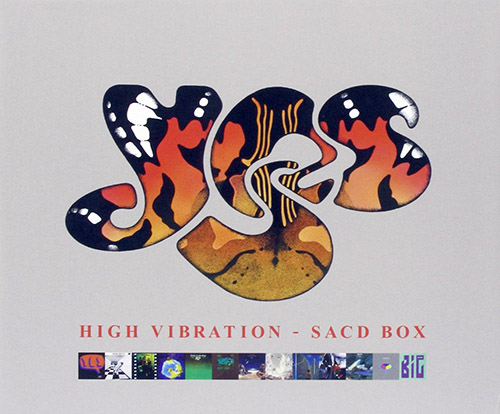
High Vibration is a 16 x Hybrid SACD Box Set made for the Japanese fans, containing their first 13 albums on 15 discs plus a bonus disc of extra tracks. All Remastered by Isao Kikuchi at 24-96 & 16-44.1 with a 220 page book in Japanese.
Albums: Yes, Time and a Word, The Yes Album, Fragile, Close to the Edge, Yessongs, Tales from Topographic Oceans, Relayer, Going for the One , Tormato, Drama, 90125, Big Generator and a Bonus Disc.
Bonus Disc: Something’s Coming, Dear Father, Roundabout (Single Edit), America, Total Mass Retain (Single Version), Soon (Single Edit), Abilene, Run Through The Light (Single Version), Run With The Fox, Owner Of A Lonely Heart (Move Yourself Mix), Leave It (Single Remix), Big Generator (Remix).
Listen
Spotify
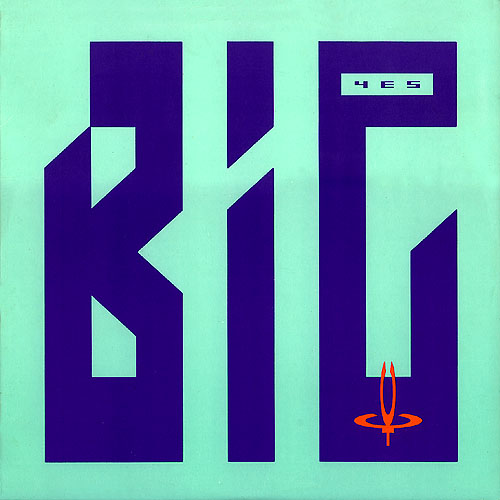
Dan Hersch & Bill Inglot 2003 Stereo RemastersBig Generator - by Chris Welch
After the enormous success of 90125 it seemed as if YES might finally be free of the traumas, splits and bust-ups that had become the pattern of their lives since the end of the Seventies. In the event, it turned out to be just the start of yet more upset. The band was destined to experience more dramatic changes which would ultimately result in not just one but two versions of YES.
The Eighties had begun with the upheaval caused by the departure of Rick Wakeman and Jon Anderson and their replacement by The Buggles. By the end of the decade Jon had left the group for a second time, only to be reunited with Rick Wakeman, Steve Howe and, unlikely as it may seem, original YES drummer Bill Bruford, in a rival ‘YES‘ that called itself ABWH. Chris Squire, Alan White and Trevor Rabin were left as the sole remaining members of what we might as well call the ‘official’ YES. Confusion and embarrassment reigned. Yet by 1991 the whole band was reunited in an act of atonement which led to an eight piece touring version of the group and a controversial album – which no one seems to admit to liking – called Union. It was enough to make a YES fan freak. Nevertheless, the band hung on to its core fanbase even though they kept coming back in different guises like actors in some Shakespearean comedy of errors.
It was certainly a trying time for Trevor Rabin, who with Chris Squire was faced with reconstructing the ‘official’ YES. Trevor must have felt he was building a shiny new skyscraper, while a bunch of eco-warriors were trying to erect a pagoda YES in the parking lot without planning permission. Rabin headed up the band which reassembled in the studios in 1985 to begin work on an album it was fervently hoped would equal the success of 90125. Studios in Italy and England were pressed into service with Trevor Horn brought back to assist with production. Then the whole caboodle headed for Los Angeles where production was taken over by Trevor Rabin and sound engineer Paul De Villiers. The result was Big Generator, released in September, 1987.
Remembers Alan White, “We started recording in Italy and did half the backing tracks. Then we came back to SARM studios in London with Trevor Horn and worked on the album there. The sessions produced ‘Rhythm Of Love‘ which is one of the most played radio songs in America. After that album we kind of split apart for a while.”
Trevor Horn encountered severe problems trying to produce the band. “I tried doing the next album Big Generator but I couldn’t finish it because the circumstances were different,” he says. “I did most of the backing tracks but it wasn’t finish-able from my point of view. They just couldn’t agree. Jon would write one thing, Trevor would write another, Chris would write something else and they’d fight about it and I was in the middle. And I’m sorry to say it’s down to one pile of shit being no different from another! In the end it’s down to who can finish the song off and nobody could on that record for me and nobody ever did. It wasn’t a case of being a committee. It was just warring factions trying to kill each other. When bands have been together for more than fifteen years they become completely money driven and it’s whoever is paying the money, where it’s coming from and what it’s being paid for that determines what gets done recording-wise.”
Given these circumstances it is no surprise that many who have worked with YES come away with a jaundiced opinion of them. Trevor Horn denies this. “Oh! I don’t have a jaundiced opinion of them. I quite miss them all and I had a lot of fun doing 90125. Don’t get me wrong. I’m not jaundiced about them at all. It’s just that keeping any kind of musical enterprise like that going for as long as it has, with all the egos involved, isn’t going to be easy. Just watch the movie This is Spinal Tap. There are elements of YES in that. Only, of course, YES are a vastly superior band!”
Chris Squire agrees it was difficult making Big Generator. “It took rather a long time,” he admits. “We fiddled around trying to record it in Italy for tax purposes, but the studios didn’t really work out, so we came back to London and for some reason Trevor Horn, who was going to produce it again, decided not to. Big Generator was a double platinum album but it lacked the lustre it started off with, although it had ‘The Rhythm Of Love‘ which was number two most played track on the radio in 1987.”

Says Chris Squire, “By the time we were making Big Generator I had moved to Los Angeles. Because of the breakdown of my marriage I left England to try a fresh approach by living in America. I wanted to see how it would work out and of course it was pretty much a big party for a couple of years. Living in Hollywood, Los Angeles in those days, someone, somewhere was having a party every night. There’d be an opening of a club or some awards ceremony, so for a couple of years there was a lot of parrying going on.”
By all accounts Chris was burning the candle at both ends. “I met a lot of interesting people but by the time it got to 1989 I realised if I was going to carry on living in Hollywood I’d have to treat it less like a party town and get down to the job of normal living. I’ve never bought a place in the States, I have always rented a house, which was a very wise move to make because ever since I moved to America the prices have been going down and down, especially when an earthquake happens, which is another big blow to house prices! I’ve been a lot better off renting. One day we might buy a house and my new wife Melissa and I debate on where that will be all the time.”
Certainly personal moods and circumstances can affect a musician’s output and creative judgement, and business pressures also play a part in moulding the eventual outcome of a project. Says Trevor Rabin, “When we did Big Generator the stuff just didn’t sound as good ‘live’. I was quite happy with some of the album. It was a weird kind of stage for the band. We’d just had this huge album 90125, the biggest YES ever had, and no one had ever experienced the kind of success we were enjoying. And so it was, ‘Okay, we’ll do the next album.’ Halfway through it the record company was saying to the world: ‘This is going to be the next Dark Side Of The Moon! There was a lot of pressure and it obviously wasn’t the next Dark Side Of The Moon. There were just two or three good moments. It’s quite funny. Billy Sherwood has told me since that it is one of his favourite albums of all time. So some people liked it and it sold pretty well. It’s platinum all over the place, although that’s not the criteria of whether it’s good or not. Trevor Horn started out producing it and although he and I have always got on really well, in the studio there were often heated arguments. But it was always for the right reasons. To our credit we are still close friends. I went to London a couple of years ago to be a session player on a Tina Turner album he was producing. So we’ve had our fun. I think he’s one of the finest producers around but on Big Generator he wasn’t too happy with working with Jon. That’s my perception of why he stepped aside. It was a pity because he had a lot of valuable input. Tony Kaye also didn’t respond to him creatively either and that led to a personal problem.
“A lot of people have ridiculed me for being a megalomaniac which couldn’t be further from the truth. It’s just because I played keyboards on the albums. And the reason I played keyboards was because Trevor Horn said, ‘I don’t want Tony Kaye playing keyboards.’ So I’ve heard it said I’m a megalomaniac. It’s not true. That’s Jon’s job. He proudly told me he used to be known as ‘Napoleon’ back in the early days. I said, ‘Well hold that thought while I’m in the band”
“Among the innovations Trevor introduced was a real brass section which many YES fans didn’t like. They claimed it was tampering with tradition. “If you don’t try and develop new ideas and take some risks, you never grow,” protests Trevor. A good example of new ideas employed during the recording was a bright yet strangely distant ambient sound – as if some of the instruments were being played in different rooms. “That’s because they are’ I had this weird idea while making Big Generator to do that. I had a friend with a studio in a castle on Lake Como near Caramati in Italy. The castle has these huge ballrooms. You could do drums in one room and guitars in another. I ended up mixing the album and producing it and I just went for shock value.”
Among the shocks are Trevor’s violent, off-the-stone-wall guitar breaks on the stomping ‘Rhythm Of Love‘ which has to be one of the finest examples of YES in dance mode. ‘Big Generator‘ too has a grindingly powetful riff broken up by stabbing brass flares which push Jon’s airy vocals into a pulsing metronomic groove; a thrusting performance by any band’s standards. Alan’s drums sound like they are breaking through the castle ramparts and enter into a battle with the guitar as Rabin and White lock together. More intergalactic guitar brings the piece to an abrupt cliffhanging conclusion. The ethereal quality of the slow paced ‘Shoot High Aim Low‘ is enhanced by some of Trevor’s most atmospheric extemporisation and Alan White’s thunderous bass drum fills could conceivably cause CDs to shatter and crack.
“Who says there’s gotta be a reason, who says there’s got to be an answer?” demands Jon over the gradually fading chorus of ‘Shoot High‘. It’s a masterful piece of production and a very clever arrangement on a piece that grows in stature with repeated plays. “That’s one of my favourite tracks on the album. We did it live for about twelve shows and then we dropped it,” says Trevor regretfully.


Says Trevor Rabin, “I actually thought in a lot of ways it was the best album I did with the band – in part. There were some parts that I thought shouldn’t have been there, like ‘Holy Lamb‘ which I thought was pretty weak. What’s a harmonic convergence? I don’t know. Ask jon. The album sold a couple of million but it certainly didn’t do as well as 90125. After that we kind of broke up for a short time and I did a solo album and tour. While I was doing that the ABWH thing started to happen.”
Excerpt from Close To The Edge: The Story of YES by Chris Welch.